

Specializations
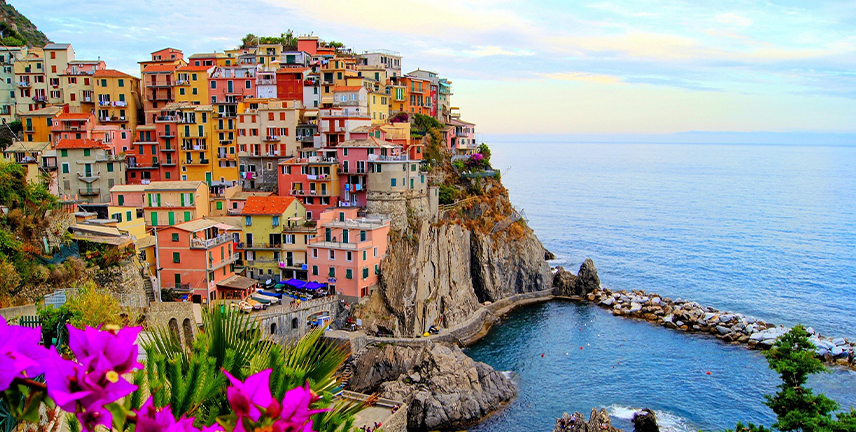
ITALY
Beautiful architecture, incredible food, and a very convincing argument for slowing down.
Italy was one of my first experiences of truly learning how people in another culture live. Spending three months in Florence at 21 years old was an experience I'll never forget—and it completely changed the way I think about travel.
The architecture and food are still two of my biggest reasons to return. Italy is one of those places where you can turn a corner and find ornate details carved into a building that would be considered a major attraction somewhere else. Courtyards tucked behind seemingly ordinary doors, centuries-old streets, and tiny neighborhood cafés make simply walking around feel like stepping into another era.
And then there's the food. Some of the freshest meals I've ever eaten have been in Italy (and Greece). Food isn't treated as something you quickly shovel into your mouth between meetings—meals are an experience. They're meant to be enjoyed slowly, usually with friends, conversation, and probably another glass of wine.
Come hungry
One of my favorite experiences was taking a cooking class in Florence. I had previously taken a cooking class at the University of South Carolina, and comparing the two made me realize just how much food culture influences the way we cook.
At USC, a class of 12 students might be divided into pairs, with each pair making their own assigned recipe. In Italy, all 12 of us made one recipe together. It wasn't about everyone having their own portion to make—it was a small but memorable lesson in reducing food waste and being thoughtful about how much we actually need.
That mindset shows up throughout Italian food culture. People often shop for fresh ingredients at small markets within walking distance of home, sometimes buying only what they need for the next day or two. Stale bread doesn't automatically get thrown away—it can become the base of a delicious soup. Desserts are often made from scratch, and chocolate means melting an actual chocolate bar rather than reaching for a bag of chocolate chips.
It made me realize that what I initially thought of as simply "fresh Italian food" was really part of a much bigger relationship with food: buy less, waste less, make it well, and actually enjoy it.
And then there are the discoveries you don't necessarily find in a guidebook: secret bakeries for late-night pastries, cafés that transform into bars after dark, and the joy of finding something delicious simply because you wandered down the right street.
So... where should you go?
For a country where you can drive from north to south in roughly 13 hours, Italy has an almost ridiculous amount to see, experience, and eat. The regions feel distinct, each with their own landscapes, traditions, cuisine, and personality.
You could spend one trip wandering through Tuscan vineyards and medieval hill towns, another exploring the dramatic coastline of the Amalfi Coast, and another eating your way through Bologna or Sicily. And somehow, you'll still leave with a list of places you didn't get to.
That's part of the magic.
Italy will always have a very special place in my heart. Maybe it's the food. Maybe it's the feeling of stepping back in time. Maybe it's those quiet courtyards hidden just beyond the front door.
Or maybe it's the reminder that life doesn't always need to be rushed.
So pour yourself a glass of vino, order something delicious, sit back, and embrace a little of the Italian way of life. La dolce vita isn't just a phrase—it's an invitation to slow down and enjoy what's right in front of you.
Destination key features:
- History & Architecture — Ancient ruins, Renaissance masterpieces, medieval villages, ornate buildings, and beautiful piazzas.
- Food & Wine — Regional cuisine, fresh ingredients, local markets, handmade pasta, gelato, and unforgettable wine.
- Easy Multi-City Travel — High-speed trains make it simple to combine cities, countryside, coastlines, and smaller towns.
- La Dolce Vita — Slow meals, afternoon espresso, neighborhood cafés, and a culture that encourages you to actually enjoy the moment.
💰 What Does a Week in Italy Cost?
Very rough estimates per person for 7 nights, including accommodations, meals, local transportation, activities, and round-trip airfare from the U.S. Actual pricing varies significantly by season and destination.
| TRAVEL STYLE | OFF-PEAK | PEAK SEASON |
|---|---|---|
| 🥾 Hostel / Budget | $1,100–$1,500 | $1,300–$1,900 |
| 🍝 3-Star | $1,600–$2,200 | $2,000–$2,800 |
| 🇮🇹 4-Star | $2,100–$3,000 | $2,700–$3,800 |
| ✨ 5-Star / Luxury | $3,500–$5,500+ | $4,500–$7,500+ |
Good to know
Italy can be surprisingly affordable if you travel by train, eat where the locals do, and stay outside the most famous tourist centers. On the other hand, destinations like Venice, the Amalfi Coast, Lake Como, and Tuscany can send your budget skyward—especially during peak summer. Current 2026 estimates put luxury travel at roughly $3,200 per person for a week before international flights, with high-end itineraries often going considerably higher.